Medisage Medical
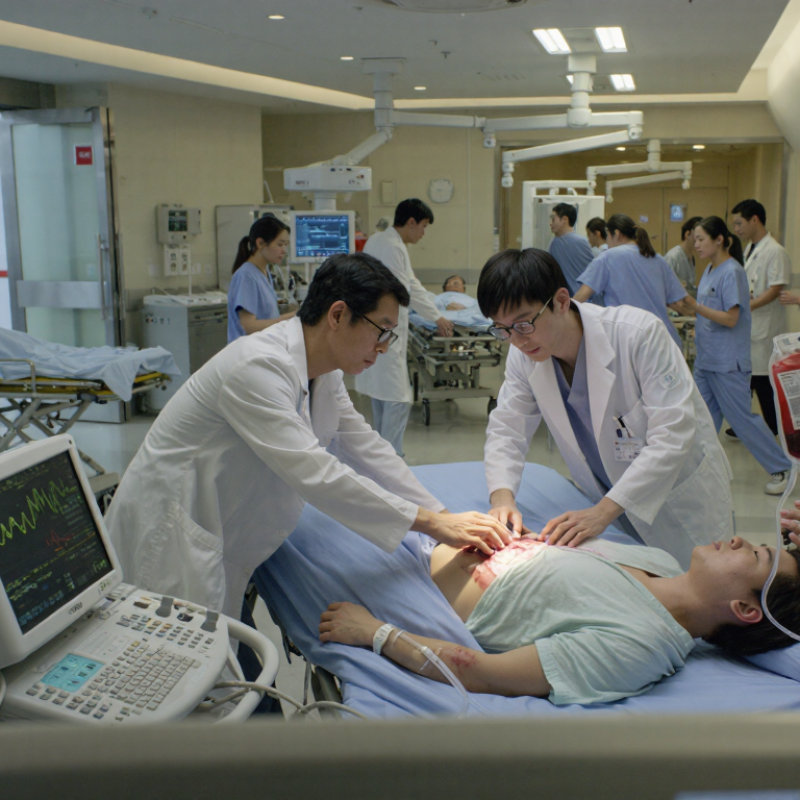
Trauma surgery in China is shaped by more than the operating room. Teams may face severe bleeding, complex injuries, delayed transfers, and uneven access to specialist care. In crowded emergency departments, minutes matter; so do blood supplies, imaging, trained staff, and clear referral pathways. What are common challenges in trauma surgery? The answer depends on where a patient is injured, how quickly help arrives, and what resources are available.
The World Health Organization’s Global Status Report on Road Safety 2023 estimates that road crashes cause about 1.19 million deaths worldwide each year. It also reports that most road deaths occur in low- and middle-income countries. These figures describe a global burden, not China alone, but they show why reliable trauma systems matter. Trauma surgeon R. Adams Cowley is often associated with the principle that “the first hour after injury will largely determine a critically injured person’s chances for survival.” The wording is widely repeated; it should not be treated as a guarantee or a rigid deadline. Rapid, coordinated care can help, but outcomes also depend on injury severity and available resources.
This article examines ten challenges in China’s trauma surgery landscape, from prehospital coordination to rehabilitation and workforce pressures. The list is a framework, not a complete diagnosis. Regional differences are substantial, and public data do not always capture what happens inside individual hospitals. That gap deserves attention. The aim is to distinguish well-documented system pressures from questions that still need stronger evidence.
China’s trauma burden reflects rapid urban growth, heavy road use, workplace hazards, and an ageing population. The World Health Organization’s Global Status Report on Road Safety 2023 estimated 248,000 road-traffic deaths in China in 2021. This is a modeled estimate, not a simple count of hospital records. The distinction matters: deaths at the scene, during transfer, or after admission may appear in different datasets. The map is not the system.
Trauma care links emergency dispatch, ambulance teams, emergency departments, and hospitals able to provide surgery and intensive care. In large cities, specialist teams may be close by; in remote counties, distance and transfer coordination can shape whether patients reach definitive care in time. China’s tiered hospital structure offers a foundation, but trauma pathways are not equally mature everywhere. A patient may cross several facilities before reaching a surgical team. That handoff is a vulnerable moment. The World Health Organization’s 2023 report also emphasizes that road safety depends on coordinated systems, not hospitals alone. Better trauma registries and shared definitions would help compare outcomes across regions. This remains unfinished work. Numbers alone cannot show what happens in the ambulance or during a rushed transfer.
The share of China’s population aged 60 and over and 65 and over, by census year.
Population ageing adds pressure to trauma services: older patients may need more complex assessment, surgery and rehabilitation, particularly after falls and fractures.
Source: China’s Sixth and Seventh National Population Censuses. Percentages are shares of the total population.
In trauma care, minutes matter before a patient reaches the operating room. In China, long distances, dense traffic, and uneven access to emergency services can complicate the journey. A collision on a rural road may leave responders far from advanced care. In a crowded city, an ambulance may lose precious time at an intersection.
Prehospital teams need clear ways to assess danger, control immediate threats, and communicate with receiving hospitals. A concise radio handover can share injury patterns, vital signs, and estimated arrival time. This gives hospital staff a chance to prepare imaging, blood products, and surgical support. Triage must also be flexible. A patient’s condition can change during transport. Reassessment matters.
The hard part is coordination. Dispatch, ambulance crews, emergency departments, and trauma surgeons may work under different pressures. A protocol can look tidy on paper and still stumble when staffing is thin or roads are blocked. That gap deserves honest review. Not every delay has one cause. Hospitals can examine transfer times and handover records, then discuss where decisions became unclear. Small details count: a delayed call, an incomplete address, or uncertainty about which facility can provide definitive care. Better access depends on reliable communication and realistic plans for both urban and remote settings.
China’s trauma-care challenge is not simply a shortage of hospitals. It is the uneven distance between an injured patient and a capable trauma team. Major cities may offer round-the-clock imaging, operating rooms, blood supplies, and several surgical specialties. In less-served areas, travel can be long, and one clinician may cover several urgent duties. That matters.
A trauma center is more than a sign at the entrance. It needs reliable ambulance handoffs, trained nurses, surgeons, anesthesiologists, and clear protocols for transferring patients. These resources can vary between provinces and between urban and rural communities. A road crash at night may expose the gap: the local hospital stabilizes the patient, but a specialist or operating team is not immediately available. Even referral networks can falter when beds, transport, or communication are limited.
Training and staffing plans should reflect local needs, not just hospital counts. Regional partnerships, regular drills, and shared case reviews can help teams build experience. Better data on transfer times and staffing coverage would also show where support is most needed. Still, numbers do not capture every delay. I may be overlooking local solutions that already work; they deserve careful study before policies are copied elsewhere.
Polytrauma care in China is a race against hidden injuries and competing priorities. A patient may arrive pale, cold, and still speaking, while internal bleeding is already worsening. The clock matters. The WHO’s 2023 Global Status Report on Road Safety estimates 1.19 million road deaths worldwide each year. This is a global figure, not a China-specific estimate, but it underscores the pressure trauma teams face.
The first challenge is making decisions with incomplete information. A normal early blood pressure can falsely reassure; repeated examination, bedside ultrasound, and timely imaging help reveal changing injuries. Teams must balance rapid surgery against resuscitation, blood-product availability, and the risk of worsening coagulopathy. In crowded emergency departments, even a short delay between diagnosis and operating-room access can matter. Yet faster is not always better. A rushed plan can miss a chest injury or an evolving abdominal bleed.
Critical care and surgical coordination bring another set of risks. Orthopedic, general, neurosurgical, anesthesia, and intensive-care teams may each see a different urgent problem. The WHO’s 2023 report also notes that road deaths remain disproportionately concentrated in low- and middle-income countries, where trauma-system capacity can be uneven. Clear handoffs, shared priorities, and frequent reassessment are practical safeguards. Still, coordination is not solved by a checklist alone. Teams should examine where communication fails during real cases, especially at shift changes and transfers.
A qualitative overview of major clinical and system-level challenges. The list is not a numerical ranking, and no local incidence or outcome rates are inferred.
| No. | Challenge | Why It Matters Clinically | Coordination or Care Consideration | Evidence Basis |
|---|---|---|---|---|
| 1 | Prehospital triage and timely transport | Severe injuries require rapid recognition, stabilization, and transport to a facility capable of definitive trauma care. Delays can complicate treatment of airway compromise, bleeding, and brain injury. | Coordinate dispatch, ambulance teams, destination decisions, and advance hospital notification; account for differences in travel distance and local service resources. | [1], [2], [3] |
| 2 | Early assessment of polytrauma | Multiple injuries may be present at once, and a serious injury can be obscured by another urgent problem. Initial assessment must identify immediate threats while avoiding missed injuries. | Use a shared primary-survey approach, repeat assessments as the patient’s condition changes, and ensure that imaging and specialist reviews address the full injury pattern. | [2], [3] |
| 3 | Hemorrhage control and resuscitation | Major bleeding can rapidly lead to shock and coagulopathy. Timely control of bleeding and appropriate resuscitation are central to care for severely injured patients. | Align emergency, surgical, anesthesia, and transfusion teams; establish clear escalation pathways and monitor response to treatment. | [2], [3] |
| 4 | Traumatic brain injury with concurrent injuries | Brain injury may coexist with chest, abdominal, or limb trauma. Hypoxia and low blood pressure can worsen secondary brain injury, while other injuries may also require urgent intervention. | Coordinate early airway and hemodynamic management with neurological assessment, imaging, and timely access to neurosurgical expertise when indicated. | [2], [3] |
| 5 | Choosing damage-control or definitive surgery | In patients with severe physiological instability, a prolonged definitive operation may be unsafe. The operative plan must reflect injury severity and the patient’s response to resuscitation. | Surgeons, anesthesiologists, and critical-care clinicians need a shared plan for operative priorities, reassessment, and subsequent definitive treatment. | [2], [3] |
| 6 | Coordinating multiple surgical specialties | Polytrauma can require urgent input from several specialties, sometimes with competing priorities for the operating room and the patient’s limited physiological reserve. | Agree on the immediate life-saving priority, sequence procedures, assign a lead coordinator, and communicate changes in the treatment plan across teams. | [2], [3] |
| 7 | Critical care after initial stabilization | Severely injured patients may need ongoing respiratory, circulatory, neurological, and organ-support care. Complications can emerge after the initial operation or resuscitation. | Plan early for postoperative critical care, consistent handovers, monitoring, and coordination between trauma, surgical, and intensive-care teams. | [2], [3] |
| 8 | Interhospital referral and transfer | Some patients need services or expertise not available at the first treating facility. Transfer itself requires clinical stabilization and careful continuity of care. | Clarify referral criteria, receiving-team acceptance, transport arrangements, and transfer of clinical notes, imaging, and treatment details. | [2], [3] |
| 9 | Trauma care for older adults | Older patients may have frailty, comorbidities, or medications that affect injury assessment, bleeding risk, surgery, and recovery. Falls are an important source of injury in older people. | Include baseline function and relevant medical history in assessment; coordinate injury treatment with perioperative, rehabilitation, and discharge planning. | [4], [5] |
| 10 | Consistent protocols, training, and outcome review | Reliable trauma care depends on coordinated teams and systems that can identify delays, gaps in care, and opportunities to improve clinical processes. | Use locally appropriate protocols, multidisciplinary training, structured case review, and trauma data systems while adapting practice to available resources. | [2], [3], [6] |
Evidence references:
[1] World Health Organization, Global Status Report on Road Safety 2023.
[2] World Health Organization, Emergency Care Systems Framework (2019).
[3] World Health Organization, Guidelines for Essential Trauma Care (2004).
[4] World Health Organization, Falls fact sheet.
[5] United Nations, Department of Economic and Social Affairs, World Population Prospects 2022.
[6] The Lancet Commission on Global Surgery, Global Surgery 2030 (2015).
These sources provide general evidence and care frameworks; the table does not present unverified China-specific statistics or imply that resource availability is uniform across the country.
Trauma surgery in China depends not only on emergency skills, but also on how reliably teams learn together. Hospitals face different caseloads, staffing levels, and access to imaging, particularly across urban and rural settings. Training needs more than lectures. Supervised operating-room experience can be paired with simulations for airway care, hemorrhage control, and rapid handoffs. Brief debriefs after difficult cases can uncover missed signals, though busy shifts often leave little time. That gap matters.
Research should reflect real clinical conditions. Carefully defined trauma registries can help hospitals compare injury patterns, treatment delays, complications, and recovery. But data quality may vary, and smaller centers may have limited research support. Studies should protect patient privacy and avoid treating one hospital’s workflow as universal. Practical questions are worth asking: When was bleeding recognized? Who coordinated the transfer? Where did communication break down?
Quality improvement turns findings into safer routines. Teams can track a focused set of measures, such as time to imaging or unplanned returns to surgery. The goal is learning, not blame. Changes need testing and adjustment, with nurses, surgeons, emergency clinicians, and administrators involved. This is hard work. Metrics can look tidy while bedside reality remains messy, and that tension deserves honest review.
Rapid urban growth, heavy road use, workplace hazards, and an ageing population all contribute. One estimate placed road-traffic deaths at 248,000 in 2021. It is modeled, not a direct count. That distinction matters.
Large cities may have specialist teams nearby. Remote patients may travel farther or pass through several facilities. Each transfer creates another handoff, and handoffs can be vulnerable.
A concise radio handover can include injury patterns, vital signs, and estimated arrival time. Hospitals can then prepare imaging, blood products, and surgical support. Details matter.
A patient’s condition can change on the way to hospital. Teams should reassess, rather than rely only on the first check. It sounds obvious. It can still be missed.
Long distances, dense traffic, thin staffing, and unclear transfer decisions can all contribute. A blocked road or incomplete address may also matter. Not every delay has one cause.
Training can combine supervised operating-room experience with simulations. Teams can practise airway care, hemorrhage control, and rapid handoffs. Short case debriefs may reveal missed signals, though busy shifts make them difficult.
Carefully defined registries can help compare injury patterns, delays, complications, and recovery. Data quality may vary, especially where research support is limited. One hospital’s workflow is not universal.
Teams can track focused measures, such as time to imaging or unplanned returns to surgery. Nurses, surgeons, emergency clinicians, and administrators should help test changes. The goal is learning, not blame. Metrics do not tell the whole story.
Trauma surgery in China faces a complex set of challenges shaped by a large and diverse population, varied regional resources, and the need to coordinate care across multiple stages. Key issues include uneven access to trauma centers, differences in specialist staffing and equipment, and delays in prehospital response, triage, or transfer. These gaps can make it harder for injured patients to receive timely, appropriate treatment, particularly in areas with limited emergency-care capacity.
For patients with multiple injuries, teams must rapidly prioritize treatment, manage critical complications, and coordinate decisions across surgical specialties and intensive care. Other important challenges include expanding practical training, strengthening research, and using consistent quality-improvement approaches to evaluate outcomes and improve care. Understanding what are common challenges in trauma surgery helps clarify why effective trauma systems depend not only on surgical skill, but also on reliable communication, regional coordination, and continued investment in professional development and care standards.
