Medisage Medical
Sourcing minimally invasive orthopedic surgery equipment requires more than comparing catalog prices. It demands clinical understanding, supplier verification, and careful attention to device performance. Before contacting manufacturers, buyers should ask, “what is minimally invasive orthopedic surgery?” The answer shapes every purchasing decision. These procedures use smaller incisions, specialized instruments, and camera-assisted techniques to reduce tissue disruption. Therefore, equipment must support precision, visibility, control, and dependable sterilization.
A practical sourcing process begins with the operating room. Review the surgeon’s preferred techniques, procedure volume, and existing systems. A compact arthroscope, high-definition monitor, shaver, drill, or cannula may appear suitable online. However, handle design, image latency, vibration, and compatibility can affect real surgical performance. Experienced buyers request product demonstrations, technical drawings, sample instruments, and documented performance data. They also verify the manufacturer’s quality system, traceability procedures, training support, warranty terms, and post-sale service.
Supplier credibility matters. Look for transparent company information, independent certifications, clinical references, and consistent documentation. Confirm that products meet the applicable requirements in the intended market. Do not rely on attractive photographs alone. A low-cost device can create hidden expenses through repairs, replacement parts, or staff retraining. No sourcing plan is flawless. Even experienced teams can overvalue specifications and overlook workflow problems. A trial in a controlled clinical setting may reveal issues that brochures hide. Reliable purchasing combines evidence, professional judgment, and honest feedback from surgeons, nurses, technicians, and procurement specialists. Safety should remain the clearest measure of value.
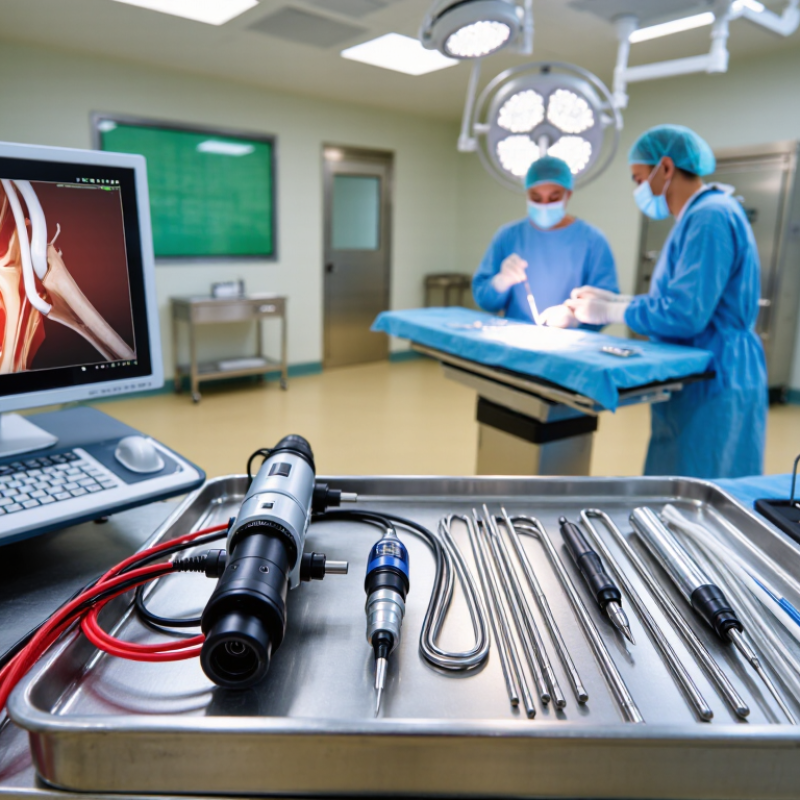
Defining requirements begins with the procedure, not the catalog. Specify the orthopedic applications, anatomical targets, incision size, and expected working depth. A device for arthroscopic repair may require different angles, diameters, and visualization support than equipment for percutaneous fracture fixation. Ask surgeons to describe hand movements, obstruction points, and emergency access needs. Their practical experience often reveals requirements missing from technical forms.
Compatibility must be measured in the operating room. Check whether instruments connect with existing imaging systems, power sources, trays, and sterilization workflows. Confirm material composition, working length, articulation range, grip design, and cleaning access. Small details matter. A narrow channel that traps tissue or debris can delay turnover and increase maintenance demands. Review published specifications, quality documentation, service procedures, and applicable medical-device requirements before comparing suppliers. Independent clinical evidence and transparent test records deserve more weight than attractive claims.
Reliability also includes people and processes. Define training needs, user manuals, preventive maintenance intervals, replacement-part availability, and response times for technical support. A hands-on evaluation can expose balance problems, poor visibility, or awkward controls that photographs hide. Use a realistic simulation with gloves, irrigation, imaging, and the intended patient position. The first checklist may still be incomplete. Revisit it after feedback from surgeons, nurses, sterile-processing staff, and biomedical engineers. Their concerns may conflict, but that tension helps reveal which requirements are essential and which are merely convenient.
When sourcing minimally invasive orthopedic surgery equipment, evaluate the procedure before the product. Arthroscopy requires a clear camera image, reliable light transmission, fluid management, and slim instruments. Percutaneous fixation may need guidewires, cannulated drills, and accurate targeting tools. Navigation systems support complex anatomy, but they also require trained staff and stable imaging workflows. Match each equipment type to real clinical applications.
Look beyond headline specifications. Check image resolution under operating-room lighting, instrument balance, grip comfort, and access around small joints. Confirm sterilization methods, reusable component durability, and compatibility with existing towers or imaging systems. A device may perform well in demonstrations yet feel awkward during a two-hour procedure. That matters. Ask surgeons and sterile-processing teams to assess setup time, cleaning steps, and failure risks. Review clinical evidence, service response, training materials, and maintenance records before purchasing.
Tips: Build a trial checklist using actual cases, not only supplier demonstrations. Record setup minutes, visibility, instrument exchanges, and staff feedback. Request documentation for safety testing, infection-control procedures, and operator training. Calculate the full cost, including repairs, disposables, software updates, and staff education. Avoid choosing solely by price. I have found that technically advanced equipment can underperform when the team lacks practice or the room layout creates delays. Leave space for honest reassessment after the first few cases.
Sourcing minimally invasive orthopedic surgery equipment starts with verifying the people behind the catalog. A qualified manufacturer should provide legal registration, quality certificates, and traceable production records. Ask where implants, scopes, powered instruments, and disposable accessories are made. Request lot numbers, material specifications, sterilization instructions, and shelf-life data. Do not rely on polished photographs. A factory visit, video audit, or independent inspection can reveal missing controls.
Medical equipment suppliers require a different review. Check whether the supplier understands orthopedic workflows, not merely product codes. An experienced supplier can explain compatibility between a camera system, shaver, irrigation pump, and operating table. They should also offer training, installation support, preventive maintenance, and responsive technical service. Ask for references from hospitals using similar procedures and case volumes. Talk directly with clinical users when possible. Their feedback often exposes delays hidden in quotations.
Before approval, compare sample documentation, delivery performance, complaint handling, and replacement procedures. A dependable partner records every inquiry and answers technical questions precisely. Vague promises deserve a pause. I have seen procurement teams focus on unit price, then discover costly compatibility problems during setup. That mistake is avoidable, although no evaluation is perfect. Leave room for a second review by a surgeon, biomedical engineer, and infection-control specialist. Confirm local regulatory requirements and post-market reporting duties before signing. A small pilot order may reveal packaging weaknesses, unclear instructions, or slow support.
How to Source Minimally Invasive Orthopedic Surgery Equipment
Quality verification should begin with the device’s intended use, not its price. Confirm the supplier’s quality management system, preferably against ISO 13485 requirements. Check the certificate’s validity, issuing body, facility address, and exact product scope. A certificate can be genuine yet irrelevant to the instrument being purchased.
Request technical files that match the supplied model. These may include material specifications, dimensional tolerances, sterilization validation, biocompatibility evidence, and electrical safety reports for powered equipment. Review risk management records under ISO 14971 principles. Inspect packaging seals, labels, and lot numbers on physical samples. Small details matter. A loose hinge or unclear marking can create avoidable operating-room delays.
Regulatory compliance depends on the destination market. Verify registration, clearance, or conformity documentation through the appropriate national authority. Confirm that instructions for use, warnings, cleaning steps, and maintenance limits are available in the required language. Ask how the supplier manages recalls, complaints, design changes, and traceability. Do not accept copied certificates without verification. That shortcut is risky.
A pre-purchase audit can reveal gaps that documents hide. Observe incoming inspection, calibration controls, employee training, and final release procedures. Sample testing should reflect real surgical handling, including repeated articulation and resistance to corrosion. No checklist catches every risk. It is easy to overtrust polished paperwork, and that remains a common sourcing mistake. Keep independent records of decisions, test results, and unresolved questions before approving the equipment.
| Equipment Category | Typical Applications | Relevant Quality or Safety Standards | Regulatory Compliance to Verify | Certification or Documentation Evidence | Pre-Purchase Quality Checks |
|---|---|---|---|---|---|
| Arthroscopic Camera and Imaging Systems | Visualization during knee, shoulder, hip, wrist, and ankle arthroscopy. | IEC 60601-1 for basic safety and essential performance of medical electrical equipment; IEC 60601-1-2 for electromagnetic compatibility where applicable. | Confirm the intended use, device classification, market authorization, electrical safety requirements, and labeling for the destination market. | Declaration of conformity, applicable test reports, regulatory submission or clearance reference, user manual, and service records. | Assess image resolution, color accuracy, latency, compatibility with arthroscopes, cable integrity, software version control, and cleaning instructions. |
| Arthroscopes and Endoscopic Optics | Minimally invasive inspection and treatment of joints and surrounding structures. | ISO 17664-1 for information supplied by the manufacturer for processing of health-care products; applicable biocompatibility and sterilization validation requirements. | Verify whether the device is reusable or single-use, its permitted reprocessing method, and its authorization for the intended procedure. | Validated reprocessing instructions, sterilization compatibility data, material specifications, inspection criteria, and traceability information. | Inspect field of view, lens clarity, light transmission, sealing surfaces, shaft alignment, leakage resistance, and performance after simulated reprocessing cycles. |
| Powered Surgical Drills and Saws | Bone preparation, drilling, cutting, and implant-site preparation. | IEC 60601-1 where applicable; ISO 14971 for medical-device risk management; relevant particular requirements for electrically powered surgical equipment. | Check electrical, battery, pneumatic, and mechanical safety requirements; verify market authorization and permitted accessories. | Risk-management file summary, electrical and mechanical test reports, battery documentation, maintenance schedule, and instructions for use. | Test speed control, torque, vibration, thermal behavior, handpiece balance, battery endurance, attachment locking, and emergency-stop functions. |
| Radiofrequency or Electrosurgical Ablation Systems | Soft-tissue treatment, hemostasis, or controlled ablation during orthopedic procedures, subject to the device’s intended use. | IEC 60601-1 and IEC 60601-1-2 where applicable; ISO 14971; relevant standards for high-frequency surgical equipment. | Verify permitted energy modes, accessories, contraindications, electromagnetic compatibility, and authorization for the stated clinical application. | Electrical safety reports, output-performance validation, compatibility information, clinical-use instructions, and adverse-event reporting procedure. | Confirm output accuracy, activation controls, alarms, patient-return monitoring where relevant, thermal spread data, and accessory recognition. |
| Fluid Management and Irrigation Pumps | Maintaining joint distension and clearing the surgical field during arthroscopy. | IEC 60601-1 where applicable; ISO 14971; validated fluid-path and disposable-set performance requirements. | Confirm pressure and flow limits, alarm behavior, fluid-contact materials, disposable-set status, and market-specific authorization. | Pressure and flow calibration records, alarm test results, fluid-path material information, user manual, and single-use component documentation. | Verify pressure accuracy, flow stability, occlusion detection, leakage resistance, alarm audibility, tubing fit, and ease of cleaning. |
| Insufflation Systems | Creating and maintaining a controlled surgical working space where the procedure requires insufflation. | IEC 60601-1 where applicable; ISO 14971; applicable gas-delivery, pressure-control, and alarm requirements. | Verify approved gas type, pressure limits, gas-source compatibility, alarms, clinical indications, and authorization in the destination market. | Pressure calibration certificate, gas compatibility statement, alarm validation, maintenance instructions, and risk-control documentation. | Check pressure accuracy, flow control, over-pressure protection, tubing connections, alarms, filters, and service accessibility. |
| Reusable Hand Instruments | Grasping, cutting, probing, retraction, tissue manipulation, and implant preparation. | ISO 13402 for resistance to autoclaving, corrosion, and thermal exposure where applicable; ISO 17664-1 for processing information; ISO 14971 for risk management. | Confirm reusable-device status, intended procedure, material safety, reprocessing instructions, and any restrictions on use. | Material certificates, validated cleaning and sterilization instructions, durability data, inspection criteria, and lot traceability. | Evaluate jaw alignment, cutting performance, articulation, surface finish, corrosion resistance, insulation integrity, and performance after repeated sterilization. |
| Disposable Cannulas, Trocar Sleeves, and Access Ports | Establishing and maintaining minimally invasive access pathways. | ISO 10993 series for biological evaluation where patient contact applies; ISO 14971; applicable sterility and packaging standards. | Verify single-use labeling, sterility status, shelf life, intended anatomical use, and authorization for the destination market. | Sterilization validation, biological evaluation information, packaging validation, shelf-life evidence, lot release records, and certificate of conformance. | Inspect packaging seals, labeling, tip geometry, valve function, dimensional accuracy, leakage resistance, and compatibility with instruments. |
| Orthopedic Navigation or Surgical Planning Software | Procedure planning, instrument tracking, alignment guidance, or intraoperative decision support. | IEC 62304 for medical-device software life-cycle processes; ISO 14971; IEC 62366-1 for usability engineering where applicable; cybersecurity controls appropriate to the system. | Determine whether the software is a medical device, verify intended-use claims, cybersecurity responsibilities, data protection obligations, and market authorization. | Software life-cycle documentation, validation summary, cybersecurity documentation, version history, user training materials, and change-control records. | Test registration accuracy, system latency, data integrity, user permissions, backup and recovery, interoperability, and behavior during network failure. |
| Sterilization and Instrument-Tracking Accessories | Cleaning, packaging, sterilization monitoring, storage, and traceability of reusable instruments. | ISO 17664-1 for processing information; ISO 11607 for packaging systems for terminally sterilized medical devices; applicable sterilization-process standards. | Verify compatibility with the facility’s sterilization process, local infection-prevention requirements, and any applicable equipment authorization. | Process-validation records, packaging integrity data, indicator specifications, maintenance records, and traceability-system documentation. | Confirm load capacity, sterilant penetration, drying performance, barcode or tracking accuracy, seal integrity, and resistance to repeated processing. |
Sourcing minimally invasive orthopedic equipment requires more than comparing catalog prices. The real cost includes imaging compatibility, sterile accessories, software updates, maintenance, and staff downtime. Ask suppliers for a five-year ownership estimate, not only an initial quotation. A lower purchase price may hide expensive disposable components. Look beyond the invoice. Request service records and references from comparable hospitals before assigning a high score.
Support should be measurable. Request response times, on-site service coverage, spare-parts availability, and escalation contacts in writing. During evaluation, ask a biomedical engineer to inspect installation requirements, electrical loads, room dimensions, and system integration. Service promises sound reassuring, but vague promises are difficult to audit. Small print matters. A reliable procurement file should also record applicable safety requirements and acceptance-testing procedures.
Training must match real surgical workflows. Surgeons, nurses, and technicians need separate sessions, hands-on practice, and competency checks before live use. Ask whether refresher training remains available after staff turnover. Procurement terms deserve careful review: warranty scope, delivery milestones, acceptance testing, payment stages, return conditions, and data-security duties. We once focused too heavily on delivery speed and overlooked user training hours. That mistake delayed adoption. No scoring model is perfect, so clinical, technical, and purchasing teams should document disagreements before signing. A clear evaluation matrix creates a more dependable decision trail.
Start with the procedure, not the catalog. Specify the anatomy, incision size, working depth, angles, diameter, and visualization needs. Ask surgeons to describe hand movements and blocked views.
Equipment must connect with existing imaging systems, power sources, trays, and sterilization workflows. Check grip design, working length, articulation, cleaning access, and material composition. A narrow channel may trap tissue and delay turnover.
Use gloves, irrigation, imaging, and the intended patient position. Test visibility, balance, controls, repeated articulation, and emergency access. Photographs hide awkward details.
Request technical files matching the exact supplied model. Review material specifications, dimensional tolerances, sterilization validation, biocompatibility evidence, and electrical safety reports. Verify certificates independently.
Check registration or conformity documents with the appropriate national authority. Confirm instructions, warnings, cleaning steps, and maintenance limits in the required language. Copied certificates are risky.
Observe incoming inspection, calibration controls, employee training, and final release procedures. Inspect packaging seals, labels, and lot numbers. No checklist catches every risk.
Request a five-year ownership estimate, not only the purchase price. Include sterile accessories, maintenance, software updates, imaging compatibility, and staff downtime. Lower prices can hide costly disposable components.
Confirm response times, on-site coverage, spare-part availability, warranty scope, and escalation contacts. Provide separate hands-on training for surgeons, nurses, and technicians. We once overlooked training hours, and adoption slowed.
Use an evaluation matrix covering clinical, technical, quality, support, and purchasing requirements. Record test results, disagreements, and unresolved questions. The first checklist may still be incomplete.
Sourcing minimally invasive orthopedic surgery equipment begins with a clear understanding of clinical needs, surgical procedures, patient volume, and facility capabilities. Buyers should first define the required equipment, then evaluate different types according to functionality, precision, ergonomics, compatibility, imaging needs, and intended clinical applications. Understanding what is minimally invasive orthopedic surgery can also help procurement teams select tools that support smaller incisions, reduced tissue disruption, and efficient surgical workflows.
A reliable sourcing process should include identifying qualified manufacturers and medical equipment suppliers with proven technical expertise and consistent production capabilities. Each product should be reviewed for quality standards, regulatory compliance, safety documentation, certifications, and traceability. Beyond the purchase price, buyers should compare warranties, maintenance, spare-parts availability, technical support, user training, delivery schedules, payment terms, and long-term operating costs. A thorough evaluation helps healthcare facilities obtain safe, practical, and cost-effective equipment while supporting dependable patient care and sustainable surgical performance.
