 Medisage Medical
Medisage Medical
Medisage Medical
Titanium has become a quiet foundation of modern medical implants. It appears in hip stems, dental posts, spinal cages, bone plates, and trauma screws. Its strength supports movement, while its relatively low density helps reduce unnecessary weight inside the body. The more important question is: what is the role of titanium in medical implants?
Professor Per-Ingvar Brånemark, the Swedish physician who pioneered osseointegration research, famously explained, “The body does not reject titanium as it does other materials.” This observation helped change dental and orthopedic surgery. A titanium implant can encourage bone to grow closely around its textured surface. That connection may improve stability during walking, chewing, or lifting.
Titanium also forms a thin oxide layer when exposed to oxygen. This layer helps protect the metal from corrosion in body fluids. Surgeons and engineers value its strength, fatigue resistance, and established clinical history. Still, titanium is not perfect. Some patients may experience inflammation, loosening, or sensitivity to implant components. Surface design, surgical technique, sterilization, and patient health all matter.
A successful implant is not simply a strong metal part. It is a carefully tested interface between living tissue and engineered material. This distinction deserves attention. Titanium may perform well, yet every implant carries biological and mechanical uncertainties. Understanding those limits leads to safer decisions, more realistic expectations, and better medical design.
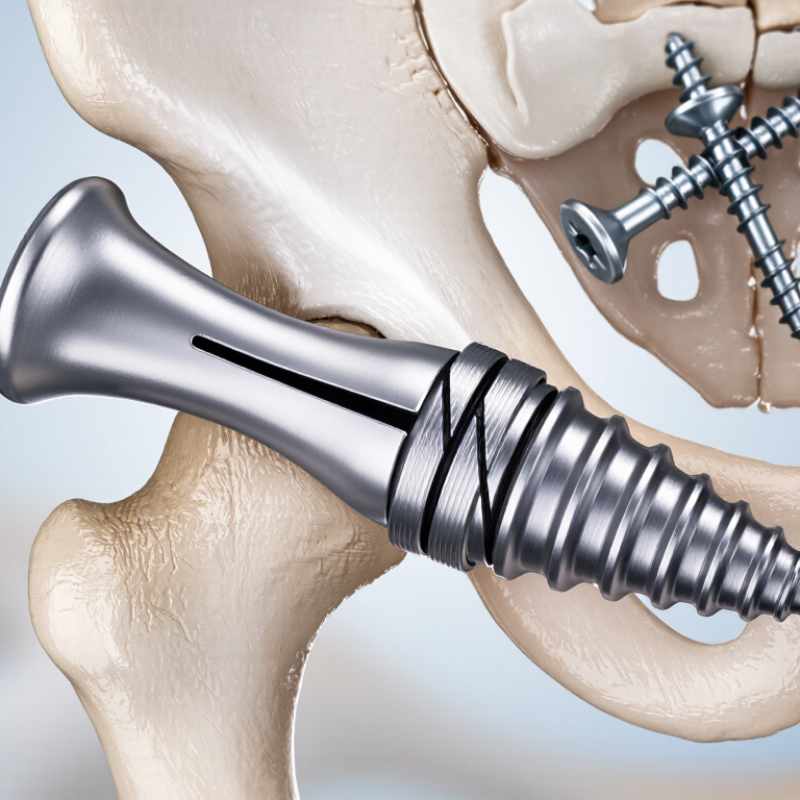
Titanium’s Essential Properties for Medical Implants
Titanium earns its place in medical implants through a combination of strength, lightness, and biological tolerance. Its thin, stable oxide layer shields the metal from body fluids and slows corrosion. That barrier matters around bones, blood vessels, and soft tissue. Unlike many metals, titanium usually produces limited inflammatory response when properly processed. It is not completely risk-free.
Titanium also supports osseointegration, where living bone attaches to an implant surface. Carefully controlled roughness gives bone cells more places to anchor. In clinical settings, this property helps stabilize dental and orthopedic implants over time. Its high strength-to-weight ratio reduces unnecessary bulk. The metal is also generally non-ferromagnetic, although imaging artifacts can still occur near some implants.
A limitation deserves attention. Titanium’s stiffness differs from natural bone, which may affect how loads travel through nearby tissue. Surface design, alloy selection, machining, and sterilization all influence performance. A poorly finished surface can create problems, despite the material’s excellent reputation. Medical teams therefore assess anatomy, expected forces, implant geometry, and patient health together. Long-term results depend on more than titanium alone. Even small manufacturing defects may matter. Regular clinical follow-up remains important, especially when discomfort, loosening, or unusual swelling appears.
Bone grows directly against the implant surface through osseointegration. Titanium’s thin oxide layer resists corrosion in salty body fluids. Tiny surface features help proteins and bone-forming cells attach. Healing takes time. It is not instant.
Surface roughness, chemistry, and wettability strongly affect bone-to-implant contact. Implant shape and healing time also matter. Reported contact often ranges from 40% to 70%. Results vary widely. Laboratory findings cannot predict every patient.
Titanium can interact with nearby soft tissue. Stable surfaces may support close tissue contact. Excessive movement can produce fibrous tissue instead of firm bone. That is a serious limitation.
Poor blood supply can delay healing. Smoking, infection, and uncontrolled diabetes may also interfere. Surgical accuracy and early implant stability remain important. The material alone cannot control biology.
They may appear in bone plates, joint components, dental fixtures, and spinal devices. Titanium is relatively light and mechanically strong. It can tolerate repeated movement. The surrounding tissue still carries part of the load.
No material is risk-free. Surgical infection can occur with any implant. Inflammatory reactions are possible, while confirmed titanium allergy appears uncommon. Wear particles may enter nearby tissue during repeated motion. Long-term monitoring matters.
Titanium may bend or fail under unusual stress. Its stiffness differs from natural bone. This difference can change how forces travel through the skeleton. Design and patient activity both matter. Nothing is guaranteed.
Researchers are developing porous structures, protective coatings, and patient-specific shapes. Some devices may include sensors for pressure, movement, or early loosening. Promising laboratory results may not improve real treatment. This distinction needs more attention.
Decisions should consider imaging, medical history, blood supply, and surgical technique. Follow-up should continue over time. Registry results can show broad trends, but they cannot isolate titanium’s effect. The evidence is useful, not perfect.
Titanium is widely valued in medical implants because it combines low weight, high strength, corrosion resistance, and excellent compatibility with the human body. Its surface can support osseointegration, allowing new bone to grow closely around the implant and creating a stable connection. This characteristic helps titanium function effectively in orthopedic and dental procedures, while its resistance to bodily fluids reduces material degradation over time. The question “what is the role of titanium in medical implants” can be answered by emphasizing its ability to provide reliable structural support while encouraging natural tissue attachment.
Titanium implants are used in bone fixation devices, joint replacements, dental roots, and other supportive medical applications. Their durability can contribute to long service life, although implant performance depends on design, placement, patient health, and appropriate clinical care. Potential limitations include differences in healing response, sensitivity to implant movement, and the need for continued research into surface treatments and personalized designs. Future advances may improve integration, comfort, and long-term outcomes while maintaining titanium’s essential safety and strength advantages.
