In today's rapidly evolving landscape of healthcare, understanding "what are the latest trends in orthopedic technology" is crucial for informed decision-making. This field is witnessing remarkable advancements, driven by innovation and research. Emerging technologies are reshaping treatment methodologies and enhancing patient outcomes.
From robotic-assisted surgeries to 3D printing of custom implants, orthopedic technology is becoming more sophisticated. Wearable devices are increasingly monitoring recovery processes. These advancements hold promise but also raise questions. Are these technologies accessible to all patients? Is there enough training for healthcare professionals?
Buyers must navigate this complex environment. By staying informed, they can ensure they make the best choices. However, attention to cost, usability, and actual patient benefit is vital. The trends in orthopedic technology offer exciting possibilities, but they require careful consideration and ethical reflection.
Latest Innovations in Orthopedic Robotics in China
China's orthopedic robotics sector is experiencing rapid growth. Innovations are transforming surgical procedures, making them more precise and efficient. Enhanced imaging technology allows for better visualization of bone structures during surgeries. This leads to improved outcomes and faster recovery times for patients.
The development of robotic-assisted surgical systems is notable. These systems can perform complex procedures with minimal invasiveness. Surgeons can operate with greater accuracy, reducing complications. However, challenges remain. Training surgeons to effectively use these technologies is essential. Integrating robots into existing hospital workflows poses another hurdle.
Patients benefit significantly from these advancements. Improved techniques mean less pain and shorter hospital stays. Nevertheless, the cost of these robotic systems can be high. Hospitals must weigh the benefits against financial constraints. The future of orthopedic robotics in China remains promising but requires ongoing evaluation and adaptation.
Advancements in Biodegradable Implants for Joint Replacement
Biodegradable implants represent a groundbreaking shift in joint replacement technology.
These implants are designed to break down over time within the body, reducing the need for additional surgery to remove them.
Made from bioresorbable materials, they provide the necessary support during the healing process.
Once their function is fulfilled, these materials are naturally absorbed by the body. This innovative approach could simplify recovery and enhance patient outcomes.
One notable aspect of biodegradable implants is their potential for minimizing long-term complications.
Traditional implants can lead to issues, such as infections or implants loosening over time.
With biodegradable options, the risk of these complications may decrease.
However, challenges remain. Research is ongoing to ensure that these implants provide adequate mechanical strength and longevity during the initial healing phase.
Furthermore, the rate of degradation must be carefully controlled to match the patient's recovery timeline.
As the field evolves, careful consideration is needed on material selection and design.
Every step forward in biodegradable technology raises questions about its implementation in clinical settings.
Striking a balance between innovation and practicality is essential.
Understanding the long-term performance of these implants will be crucial for their acceptance among healthcare providers and patients alike.
The Role of Artificial Intelligence in Orthopedic Diagnostics
Artificial intelligence is transforming orthopedic diagnostics dramatically.
AI systems analyze medical images swiftly. They help identify conditions like fractures or arthritis more accurately.
The technology increases the speed of diagnoses, reducing the waiting time for patients.
However, reliance on AI also raises concerns. Not all software is created equal.
Variability in data quality can lead to inaccuracies.
Tips: Regularly review the AI tools used in orthopedic settings. Ensure they meet the latest standards. Keep track of updates in technology and guidelines.
Orthopedic surgeons can benefit from collaborating with AI. Yet, human judgment remains essential. Clinicians must validate AI findings with their expertise.
This partnership can enhance patient care but may still pose risks. Understanding the limitations of technology is crucial.
Tips: Encourage open discussions among medical teams about AI's role. Share experiences to foster a culture of vigilance in diagnostics.
Celebrate successes, but remain critical of potential errors.
Emerging Trends in 3D Printing for Custom Orthopedic Devices
3D printing technology is revolutionizing the field of orthopedics. Custom orthopedic devices made through 3D printing offer unique solutions tailored to individual patient needs. A recent report by the MarketsandMarkets predicts that the 3D printing orthopedic market will reach USD 1.5 billion by 2025, showcasing significant growth.
These devices are not just innovative; they also improve patient outcomes. A 2023 study in the Journal of Orthopedic Research found that personalized implants reduce surgery time and recovery periods. However, the technology is not without its challenges. The consistency and reliability of 3D printed materials remain a concern. Researchers explore biocompatibility and strength to ensure long-lasting results.
Cost is another factor to consider. While 3D printing can reduce production costs in the long run, initial investments in advanced printers can be substantial. Medical professionals must weigh the benefits against the costs when incorporating this technology. Despite these challenges, the potential for medical advancements is significant. As the technology matures, its place in the orthopedic landscape will continue to evolve.
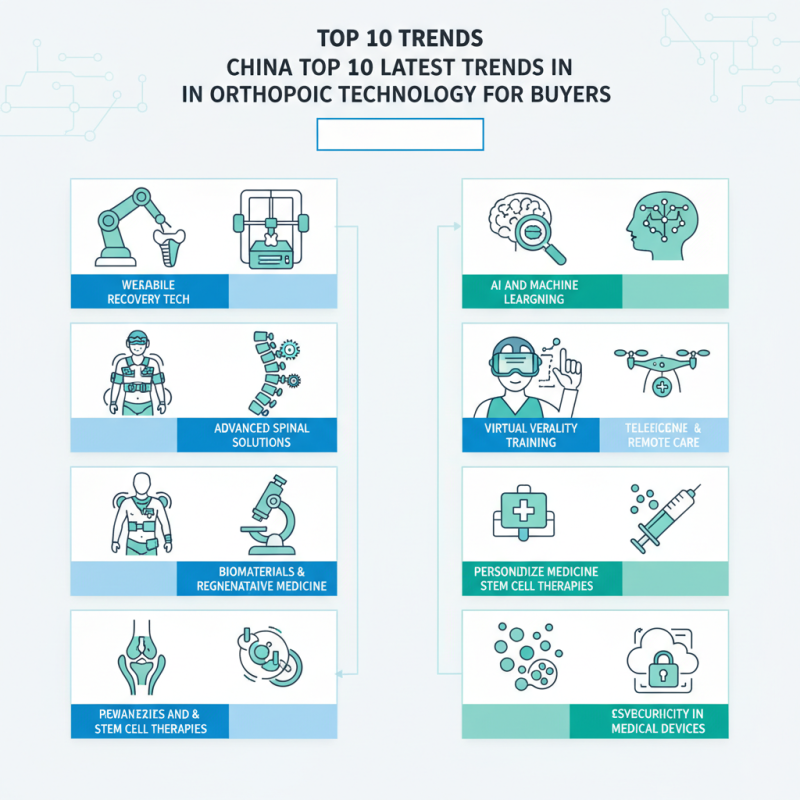
China Top 10 Latest Trends in Orthopedic Technology for Buyers
| Trend |
Description |
Impact on Market |
Future Outlook |
| Advanced 3D Printing |
Custom orthopedic implants designed via 3D printing technology. |
Increased adoption in personalized treatment plans. |
Expected to dominate the market with further improvements in quality. |
| Biodegradable Implants |
Implants that dissolve in the body over time, reducing the need for removal surgery. |
Provides better patient outcomes and reduces costs. |
Growing interest amid sustainability practices in healthcare. |
| Wearable Technology |
Devices that monitor recovery and physical activity post-surgery. |
Enhanced patient engagement and adherence to rehabilitation. |
Rapid advancements in sensor technology will drive growth. |
| Robotic-Assisted Surgery |
Surgeries performed with precision robotic systems. |
Improves accuracy and minimizes recovery time. |
Continued integration into orthopedic practices. |
| Smart Prosthetics |
Prosthetics equipped with sensory technology for real-time feedback. |
Enhances functionality and user experience significantly. |
Market potential is strong as technology advances. |
| Telemedicine Integration |
Remote consultation and follow-up care via digital platforms. |
Expands access to care and convenience for patients. |
Growing acceptance as norms shift towards virtual care. |
| Augmented Reality (AR) |
Usage of AR for surgical planning and education. |
Improves training efficiencies and surgical outcomes. |
Potential to revolutionize the training landscape. |
| AI in Diagnostics |
Leveraging machine learning to enhance diagnostic precision. |
Faster and more accurate assessments for patients. |
Continued innovation in predictive analytics expected. |
| Personalized Medicine |
Tailoring treatments based on individual patient profiles. |
Leads to better treatment outcomes and lower adverse effects. |
Expected to grow as understanding of genetics increases. |
Telemedicine and Remote Patient Monitoring in Orthopedics
Telemedicine and
remote patient monitoring
are transforming orthopedic care. These technologies improve patient outcomes and enhance accessibility.
According to recent reports, remote monitoring has increased patient satisfaction by 20%.
This is crucial as more patients prefer convenience in their healthcare.
Real-time data collection enables orthopedic specialists to track recovery progress.
Patients can send updates directly from home, reducing the need for in-person visits.
This approach not only saves time but also enhances treatment responsiveness.
However, some challenges exist.
Not all patients have access to necessary technology.
Rural areas may struggle with connectivity issues.
Tips for Implementing Telemedicine in Orthopedics:
- Ensure that patients are educated about the technology.
- Provide user-friendly platforms for communication.
- Regular feedback loops can help address concerns about remote monitoring.
- Encouraging open dialogue can enhance trust between patients and their healthcare providers.
Overall, leveraging telemedicine can significantly improve orthopedic care while acknowledging the ongoing barriers that need addressing.
FAQS
: Biodegradable implants are designed to break down within the body over time, reducing surgery need for removal.
They minimize long-term complications, like infections, and simplify recovery by naturally being absorbed after fulfilling their function.
Ensuring adequate mechanical strength during healing and controlling degradation rates are significant challenges to address.
AI analyzes medical images quickly, improving the speed and accuracy of diagnosing conditions like fractures and arthritis.
Variability in data quality can lead to inaccuracies, highlighting the need for regular review and validation by clinicians.
Human judgment is essential to validate AI findings, enhancing patient care while managing potential risks associated with technology.
It allows for custom orthopedic devices tailored to individual patient needs, improving outcomes and reducing surgery times.
Consistency and reliability of printed materials and the substantial initial investment for advanced printers are notable challenges.
While production costs may decrease over time, initial investment can be high, prompting professionals to weigh benefits against costs.
Both technologies hold significant potential for advancements, but ongoing research and careful implementation are necessary for success.
Conclusion
In recent years, China has witnessed significant advancements in orthopedic technology, prompting the question: what are the latest trends in orthopedic technology? One prominent trend is the innovative use of robotics in orthopedic procedures, enhancing precision and efficiency in surgeries. Additionally, there has been a surge in the development of biodegradable implants, which promise to improve outcomes for joint replacement by reducing long-term complications.
Artificial intelligence is playing an increasingly vital role in orthopedic diagnostics, streamlining the identification and treatment of various conditions. Moreover, 3D printing technology is gaining traction for the creation of customized orthopedic devices, tailored to individual patient needs. Finally, telemedicine and remote patient monitoring are emerging as crucial elements in orthopedic care, allowing for better patient management and follow-ups. Together, these trends signify a transformative shift in the orthopedic landscape in China.
 Medisage Medical
